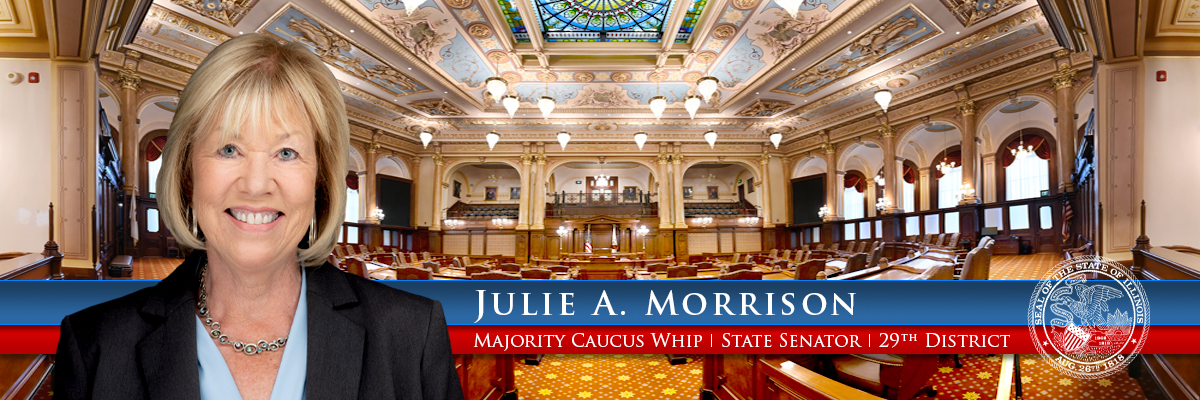
Welcome to Senator Julie Morrison's Legislative Website

- Details
- Category: Latest
For the first time in years, the Senate Veterans Affairs Committee met – this time with State Senator Julie Morrison serving as the chair.

“Every day we benefit from the sacrifices and hard work of our veterans, and I simply cannot thank them enough for what they do,” said Morrison (D-Lake Forest). “It is our civic duty as elected officials to support these local heroes by ensuring they have access to the resources they need to live happy, healthy lives,"
Morrison will serve as chair of the Senate Veterans Affairs Committee throughout the 103rd General Assembly. Morrison was a steadfast advocate on restarting the committee after hearing from many veterans in the community that they needed an advocate in Springfield. Morrison’s district includes the military facilities of Fort Sheridan and Great Lake Naval Training Base.
The committee will meet regularly throughout the legislative session to discuss matters relating to veterans and how the General Assembly can better provide for them.
“Veterans are forgotten heroes that should be remembered and supported,” said Morrison (D-Lake Forest). “They put their lives on the line for our freedom and safety and deserve the utmost respect and assistance when they return home.”
- Details
- Category: Latest
SPRINGFIELD – For years State Senator Julie Morrison has demanded a fix to the well-documented problems at the Department of Child and Family Services that have led to mistreatment of the state’s most vulnerable population.
On Wednesday, the governor shared Morrison’s concerns, and proposed additional funding for the troubled state agency.
“No state agency has gone through more turmoil over the past decade. While not every problem revolves around funding, many of the Department of Children and Family Services’ high-profile failures come from a lack of resources,” said Morrison (D-Lake Forest). “I will work diligently with DCFS to hold them accountable and make sure the additional funding is used appropriately for resources to best help our state's most vulnerable children.”
Morrison – chair of the Senate’s Health and Human Services Committee – has been a constant advocate for more oversight for DCFS following years of reporting issues, understaffing and mistreatment of children in the system. The additional funding proposed Wednesday would be used to boost the workforce, which would reduce caseloads for investigators and allow more attention to go toward the high demand of services.
“Many agencies that are tasked with helping and protecting our state’s most vulnerable populations already struggle with too few resources,” Morrison said. “Illinois should be a leader in showing that ever person is valuable and deserve to be treated with human dignity.”
In the months to come, Morrison and her colleagues will negotiate the details of the Fiscal Year 2024 budget. Aside from more funding for DCFS, Morrison will push for a plan that prioritizes law enforcement, working families, health care employees, and education.
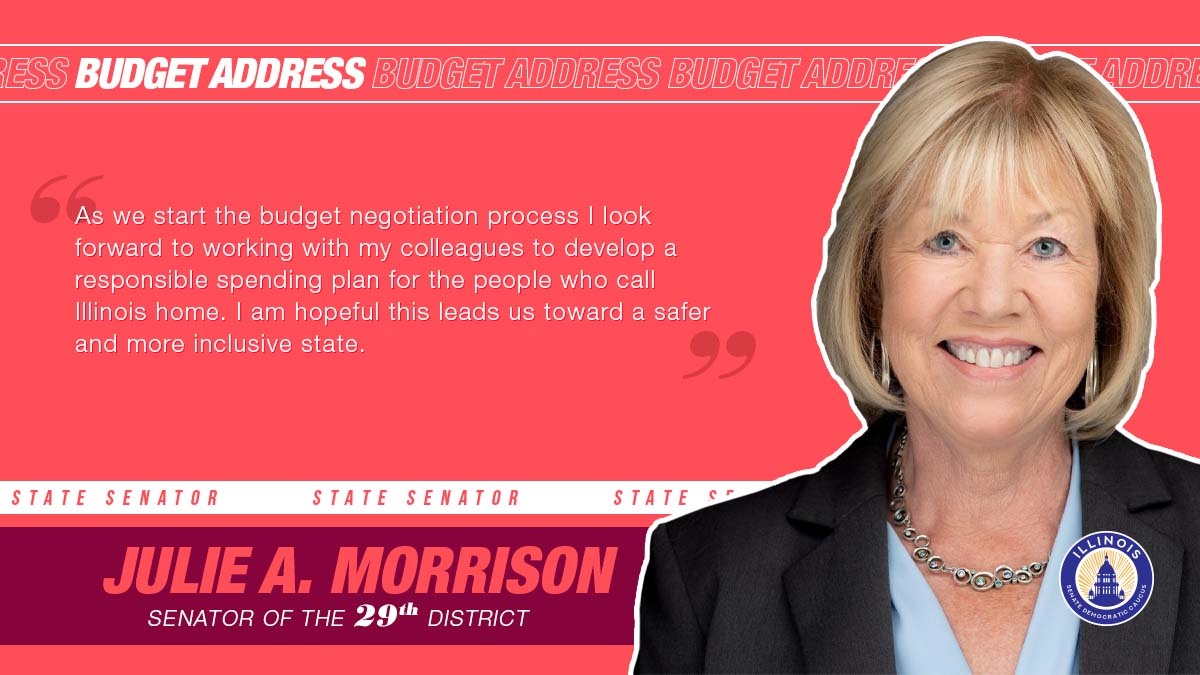
“As we start the budget negotiation process I look forward to working with my colleagues to develop a responsible spending plan for the people who call Illinois home,” said Morrison. “I am hopeful this leads us toward a safer and more inclusive state.”
- Details
- Category: Latest
HIGHWOOD – State Senator Julie Morrison (D- Lake Forest) is urging current and former youth under the care of the Illinois Department of Children and Family Services to apply for the 2023 DCFS Scholarship Program.

“Furthering education can open so many doors for children, especially our most vulnerable youth,” said Morrison, who has been a steadfast advocate for funding and resources for DCFS. “This scholarship opportunity can give students the tools they need to succeed in higher education, so I urge anyone who can to apply.”
The DCFS Scholarship Program is open to youth who have an open DCFS case, whose cases were closed through adoption or guardianship, or who aged out of care at 18 or older. Youth who are at least 16 years old and not yet 21 on March 31 may apply. The program will award 53 academic scholarships in total.
Scholarship recipients are selected based on their scholastic record, community and extracurricular activities, letters of recommendation and a written personal statement. Recipients will receive up to five consecutive years of tuition and academic fee waivers to be used at participating Illinois state community colleges and universities, a monthly grant of $1,506 to offset other expenses and a medical card.
“This scholarship can alleviate the stress many students feel when transitioning into college, and allow students to focus on their education instead of worrying about how they will be able to pay for school,” Morrison said.
Applications are due by March 31. More information and the application are available at any DCFS regional office and on the www2.illinois.gov/dcfs under DCFS Features on the homepage.
Students or caregivers may also call the DCFS Office of Education and Transition Services at 217-557-2689 with questions about the application process or for more information.
More Articles …
- Morrison sworn in to State Senate, vows to continue platform of health equality, efficient government
- Senator Morrison passes assault weapons ban, six months after Highland Park mass shooting
- Morrison works with law enforcement to pass measure clarifying SAFE-T Act
- Morrison extends thanks to first responders in Illinois
Page 27 of 50

Welcome!
Welcome to my legislative website! I am proud to serve as the State Senator from Illinois' 29th District, representing portions of the North Suburbs of Chicago in Lake and Cook Counties.
It is truly my honor to represent you in Springfield. Please do not hesitate to contact my office with questions or ways I can better serve you.
Sincerely,
Julie Morrison